
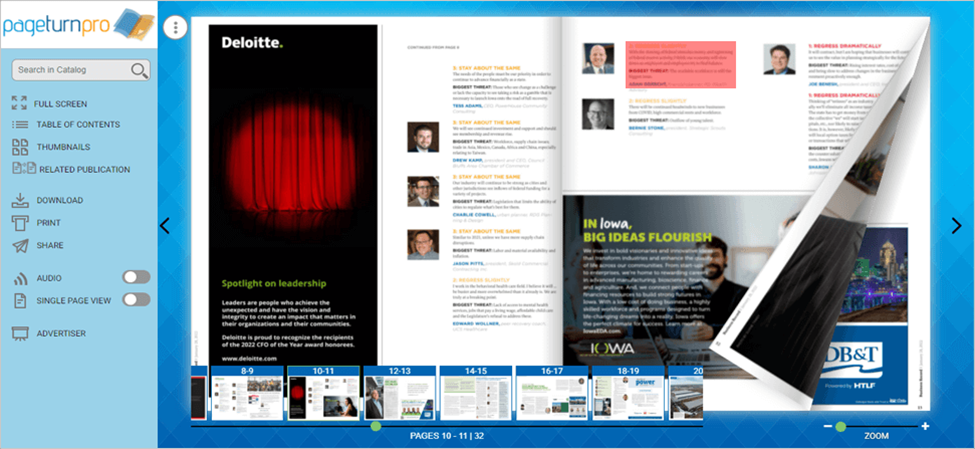
PDF page turning software is used to create a more interactive PDF flipbook, from a relatively static and scrolling PDF document. These tools simulate the actual experience of reading a book, so that creators can embed videos, hyperlinks, audio and much more, which boosts reader engagement and delivers in-depth analytics on how well the content is doing.
For decades, the standard Portable Document Format (PDF) files have been the foundation of digital document sharing. They maintain formatting, fonts and layout in a consistent way across widely different operating systems. A file can be sent to another member of your team, no matter how far away they are, and it will look exactly the same on their screen as on yours.
This is the traditional format which has however a big disadvantage for the modern digital usage. With standard PDFs, the reader has to scroll to view every page in a monotonous down-to-down pattern. Tireless readers are easily distracted by long walls of static text and images. Flat documents just don’t seem to keep the eye when digital viewers have developed a taste for highly engaging, interactive content.
PDF page flipping software is the solution that can solve this problem of engagement. Organizations can transform ordinary files into dynamic digital flipbooks, adding an interactive and active quality to the delivered content. Users can “turn” the pages by clicking or swiping, and can interact with the content just like they would in a real magazine or catalog. This change is an entire reinvention of how audiences are interacting with marketing materials, annual reports and sales brochures.
What’s the benefit of moving away from static PDFs to digital flipbooks?
Digital collateral is essential for organizations to present value, but how they do it is what makes the difference in terms of who reads it. The conversion of materials to digital flipbook format has several clear benefits over the distribution of flat files.
What’s the advantage of interactive flipbooks on viewers’ engagement?
Digital flipbooks are engaging and mimic a tangible experience of reading print media. When you flip through a page, you’ll feel like you’re moving forward, which scrolling can’t do. This physical interaction is natural and an effective way to keep readers on the page for longer, and eating more pages.
Also, PDF page turning software does not require bulky files to be downloaded onto hard drives. Flipbooks are generally created and kept online through a typical web link. This gives them immediate access and less friction, which allows more people to open and read your content rather than forgo it by letting a downloaded file lay unread in a folder.
What are some of the other media components that can be incorporated into a digital flipbook?
The standard PDFs only let you add text, images and simple hyperlinks. PDF page turning software is going to give you a lot more creative freedom. In digital flipbook platforms, the publishers can directly add rich media to the document pages.
Product demonstration videos can be inserted directly next to the product descriptions in a digital catalog. An audio clip, background music, or podcast can be embedded in an online magazine. Many software packages also have interactive image galleries, lead capture forms and dynamic pop-ups. These features can be incorporated within a document so that the document is not just a reading assignment, but also a total multimedia presentation.
What is involved in PDF page turning software?
The understanding of how they work enables a team to implement them more effectively. Modern software solutions make it easy to transition from a static file to a rich digital experience, an experience that really requires very little technical skill.
What is the typical method of converting a PDF file to a flip book?
The conversion process starts with an excellent and finalized PDF. This source document is uploaded into the pdf page turning software of your choice. Then the platform’s engine mashes the file into a responsive HTML5 framework, mapping the text and images. The resulting flipbook will work on every desktop computer, tablet, and smartphone, and it doesn’t require the reader to install third-party plugins.
After the initial conversion, the software offers editing interface. Here you can add your multimedia elements, customize the background viewer, and incorporate your branding colors. Lastly, the software will give you a link or embed code that you can share with others and put directly on your company’s website.
How to choose the right PDF page turning software for your business?
There are many different tools available to use in the market to create interactive flipbooks. The choice of platform will depend entirely on your organisation’s objectives, technical requirements and budget. The best software program you can go for in the market is PageTurnPro page turning software.
What are the key attributes for professional publishers?
If you’re measuring PDF page turning software, make sure that the tool you select has strong data tracking capabilities. Advanced platforms offer detailed analytics, revealing how many individuals have viewed the flipbook, the amount of time they spent on the pages, and which embedded links were most effective in driving clicks. All valuable information to improve future content.
You also have to take into account how often you require your site to be updated and the type of hosting you need. If your team would rather collaborate and update documents in real-time than purchase one-off software to turn pages on PDFs, you should select a cloud-based PDF page turning solution. Cloud platforms also enable you to catch up on a typo or change a product price after publishing a flipbook, and the changes will automatically update the same shareable link. Or, if your organization needs to host the final HTML5 files internally and securely, then search for downloadable desktop software that will allow you to host the final files internally on your server.
Conclusion
Making your digital communications more modern by converting a document strategy from a static file to an interactive flipbook is a very powerful move. The use of PDF page turning softwareoffers a valuable way to engage your audience, make it more accessible, and track their reading progress.
Begin by conducting a library inventory of existing digital documents. Look for high-value assets that are currently underperforming, such as product catalogs, employee handbooks or quarterly reports. Choose a trusted digital flipbook solution, upload your most essential document and try to make just one or two interactive components. Your audience will see the difference in how they interact with your content in no time.
