
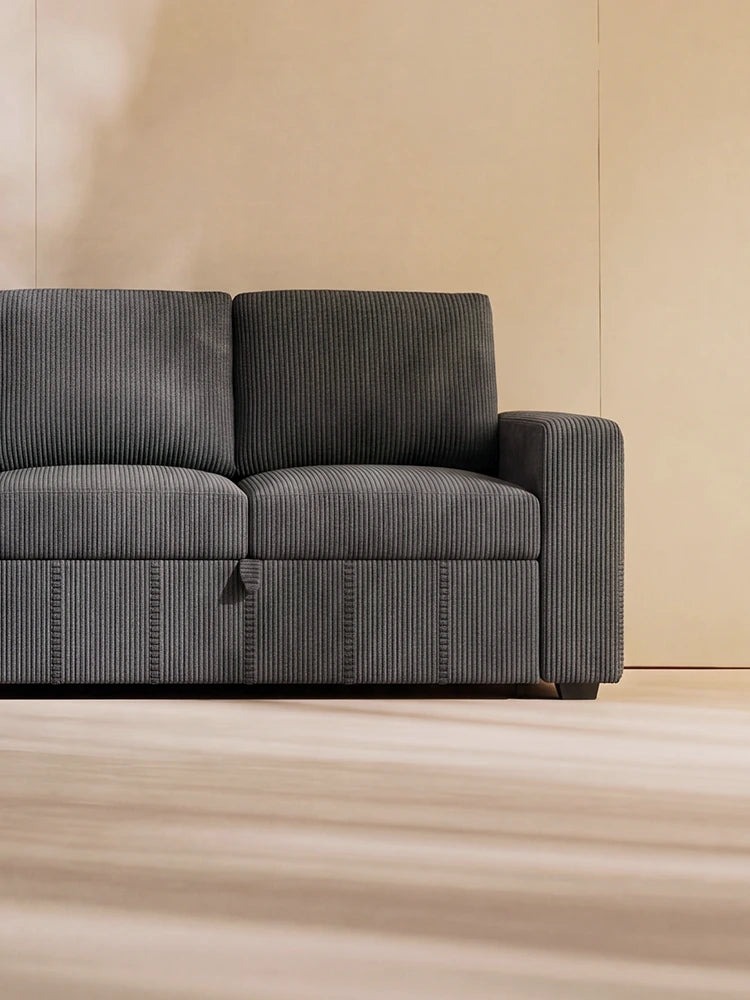
Textured upholstery has quietly become one of the most talked-about details in contemporary living rooms, and few pieces embody that shift better than the corduroy sofa. Its ribbed surface catches light in a way flat weaves never can, giving a room instant depth without shouting for attention. For homeowners who want warmth without slipping into rustic territory, and for renters who need a single anchor piece that works with rotating decor, ribbed velvet-adjacent seating has become a practical answer. This guide walks through how to choose the right silhouette, coordinate colors, layer textiles, arrange the surrounding space, and keep the fabric looking fresh across seasons. Whether you are furnishing your first apartment or refreshing a family room that has seen better days, the following sections offer specific, actionable steps rather than vague inspiration. By the end you should be able to picture, purchase, and place a ribbed sofa with confidence.
Choosing the Right Corduroy Sofa Silhouette for Your Space
Silhouette drives everything else, so start by measuring your room and mapping traffic paths before browsing. A room narrower than eleven feet usually reads better with a low-back armless sectional, while a longer den can carry a chaise or a deep-seat pit-style build. If you often host, look for a modular corduroy sofa with reconfigurable pieces, since the ribbed fabric shows off curves and corners equally well. Pay attention to arm shape too: track arms feel architectural and modern, while roll arms lean softer and more traditional. Seat depth matters more than most shoppers expect. Anything above twenty-two inches invites lounging with pillows behind the back, while shallower seats keep the posture more upright and formal. Match the depth to how you actually use the room, not how you imagine using it.
Reading the Wale Count
Corduroy is graded by wale, the number of ridges per inch. Wide-wale, roughly four to six ridges per inch, produces a chunky, casual look that suits sunken living rooms and eclectic mixes. Medium-wale hovers around eight to eleven and stays flexible across styles. Narrow-wale, above twelve, reads almost like velvet and lifts a room toward the refined end. Ask for a fabric swatch before committing so you can see the wale in your actual light.
Building a Color Palette Around a Ribbed Sofa
Because ribbed fabric already carries visual texture, its color influences the entire palette. Warm neutrals such as caramel, oat, and terracotta pair naturally with wood tones and cream walls, producing a grounded, gallery-like feel. Cool tones like slate, sage, and dusty blue calm a bright room and read beautifully against matte black hardware. If you lean bold, deep forest or rust anchors a space without demanding matching accents. Once the sofa color is settled, choose two supporting hues for pillows and rugs, plus one accent shade used sparingly in art or ceramics. Keep undertones consistent. Warm ribbed upholstery clashes with cool grey walls; cool ribbed upholstery flattens against yellow-beige floors. When in doubt, hold a swatch against the largest fixed surface in the room and step back six feet before deciding.
Layering Textiles Without Overwhelming the Texture
The ridged surface is already a texture, so the goal is contrast rather than repetition. Pair the sofa with a smooth flatweave or short-pile rug beneath, then add pillows in linen, boucle, or brushed cotton. Avoid other ribbed fabrics on the same piece, since two similar textures compete instead of complementing. Throws in chunky knit or waffle weave introduce contrast at the arm without adding pattern. If you love pattern, keep it to one item, usually a lumbar pillow or the rug, and let the sofa remain the calm center. Scale matters as much as material. Oversized pillows drown a low-profile sectional; small pillows disappear on a deep pit build. Aim for two large squares at the corners, one medium square in the middle, and a single lumbar for a balanced, uncomplicated arrangement.
Arranging Furniture and Lighting Around the Sofa
Ribbed upholstery interacts dramatically with light, so plan illumination deliberately. Place a floor lamp with a warm bulb near one arm to graze the ridges and highlight the texture at night. A ceiling fixture with adjustable dimming keeps the room versatile for hosting and movie nights. Position the sofa so it faces the primary focal point, whether that is a fireplace, window, or media wall, and leave at least thirty inches of walking space behind or beside it. A round or oval coffee table softens the geometry of a rectangular sofa and reduces sharp corners in tight rooms. Side tables should sit within an inch of arm height so drinks and books rest naturally. HONBAY buyers often note that a single well-placed reading nook beside the sofa transforms daily use, since it invites lingering without crowding the main seating.
Caring for Corduroy So It Ages Gracefully
Ridged fabric attracts lint and pet hair more than smooth weaves, but routine care keeps it looking crisp. Vacuum weekly with a soft brush attachment, running the head along the direction of the wale rather than across it. Spot clean spills immediately with a damp microfiber cloth and mild detergent, blotting rather than rubbing to protect the pile. Rotate loose cushions every two weeks so wear distributes evenly, and flip reversible seat cushions monthly. Sunlight fades any upholstery over time, so use sheer curtains during peak afternoon hours or reposition the sofa away from direct exposure. If crushing develops in a heavily used spot, steam the area lightly from a distance and brush the pile back into alignment with your palm. With consistent care, a quality ribbed sofa remains presentable well past the point where trendier pieces would look tired.
Bringing Warmth Home Through Texture
Styling a ribbed sofa comes down to a handful of grounded decisions: choose a silhouette that matches how you actually live, build a palette with consistent undertones, contrast the ridged texture rather than echo it, and light the piece so its surface earns its keep after sundown. Care habits close the loop, keeping the fabric from flattening or fading before its time. None of these steps require designer-level skill, only attention to the room in front of you. A well-chosen ribbed sofa quietly organizes the entire space around it, giving a modern living room the kind of warmth that photographs beautifully but, more importantly, feels good to come home to every evening.
