
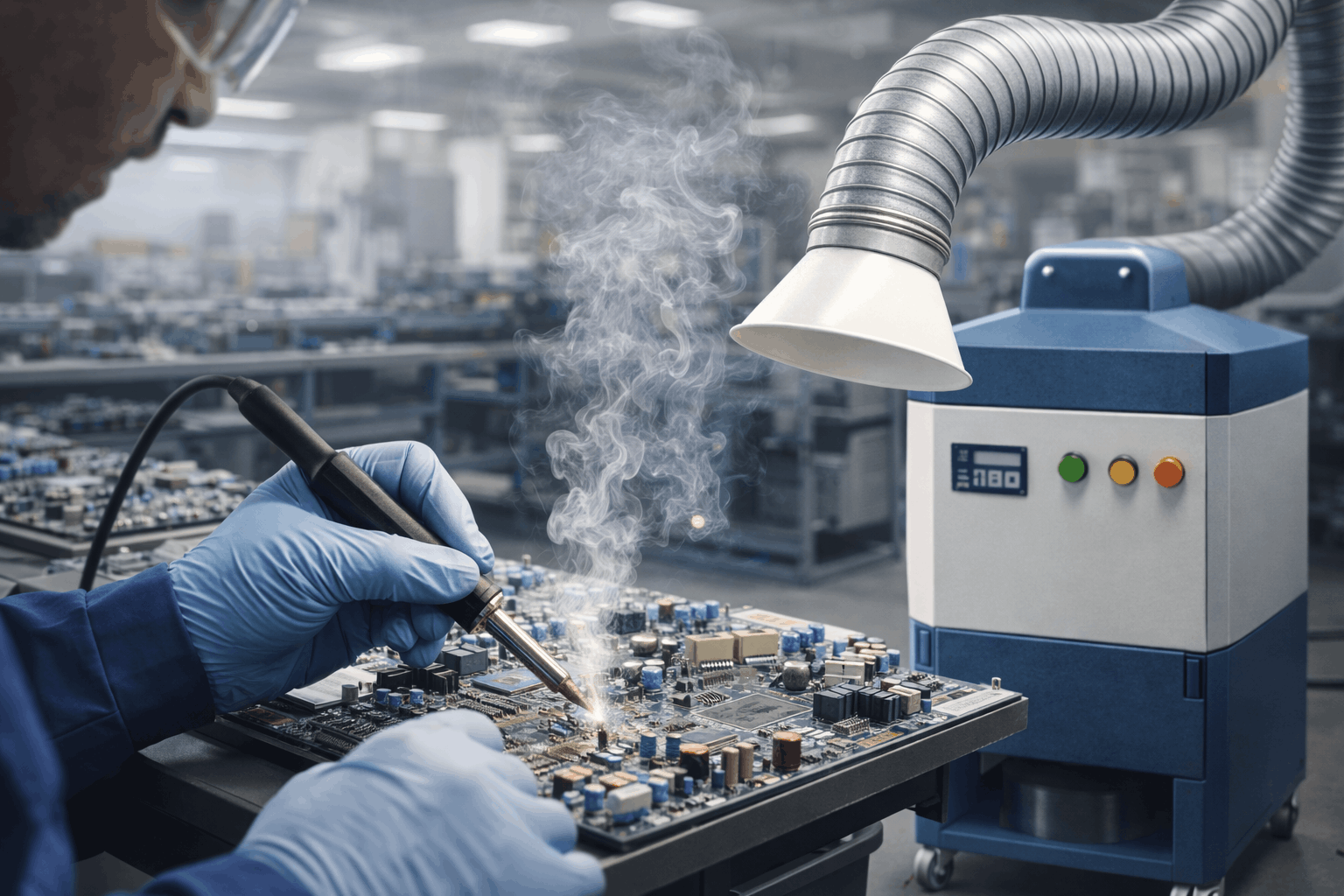
Working in electronics assembly and repair exposes you to a range of airborne hazards that are not always visible to the naked eye. Soldering, desoldering, and other thermal processes release chemical fumes and fine particulates that can pose serious risks to your respiratory health over time. Understanding how fume extraction systems work — and why they matter — is essential for anyone operating in these environments. Whether you work in a large manufacturing facility or a small repair shop, the air quality around your workstation directly affects your short- and long-term well-being.
The Hazards Produced During Electronics Work
When you solder or desolder components, the heat applied to flux and other materials generates a complex mixture of airborne contaminants. Flux fumes are among the most common hazards, and they can contain colophony, isocyanates, and other irritating or sensitizing compounds. Prolonged exposure to these substances has been linked to occupational asthma, respiratory irritation, and other health conditions recognized by occupational health authorities. Fine particulate matter produced during these processes can penetrate deep into the lungs, bypassing the body’s natural filtering mechanisms entirely. Beyond flux-based emissions, certain solder alloys and component coatings may also release metallic vapors, adding another layer of chemical complexity to the air you breathe at your workstation.
How Fume Extraction Systems Function
Fume extraction systems are designed to capture airborne contaminants at or near the source before they disperse into the wider workspace. Most systems draw polluted air through a nozzle or capture hood positioned close to the point of emission, pulling fumes away from your breathing zone before they have a chance to spread. The captured air then passes through a filtration assembly that typically includes a pre-filter for larger particles, a HEPA filter for fine particulates, and an activated carbon filter for chemical vapors and odors. Some advanced systems incorporate specialized filter media to target specific contaminants commonly found in electronics work, such as flux residues and metallic fumes. The cleaned air is then either recirculated back into the workspace or exhausted outside, depending on the system’s design and your facility’s overall ventilation setup.
Source Capture Versus Ambient Ventilation
There are two primary approaches to managing air quality in electronics environments: source capture extraction and ambient, or general, ventilation. Source capture systems — such as fume extractors positioned at individual workstations — address contaminants directly at the point of generation, making them significantly more efficient at reducing personal exposure. General ventilation dilutes contaminated air by mixing it with fresh air throughout the room, but it does not eliminate the hazard at its origin point. Occupational health guidelines from organizations recommend source capture extraction as the preferred method for controlling soldering fumes, particularly in enclosed or poorly ventilated spaces. When you rely solely on ambient ventilation, there is a greater risk that fumes will pass through your breathing zone before being diluted — which is exactly why careful fume extraction for soldering is a critical consideration in workstation design.
Filtration Standards and Maintenance Considerations
The effectiveness of any fume extraction system depends heavily on the quality of its filtration components and how consistently those components are maintained. Filters have a finite capacity and will become saturated over time, reducing airflow and allowing contaminants to bypass the filtration media if replacements are not made on schedule. You should follow the manufacturer’s recommended maintenance intervals and monitor filter condition indicators if your system includes them. HEPA filters, by definition, must capture at least 99.97% of particles at 0.3 microns in diameter, making them a widely accepted benchmark for fine particulate filtration in electronics environments. Activated carbon filters require particular attention because their chemical adsorption capacity degrades with use — a spent carbon filter may offer little protection against vapor-phase contaminants even when airflow still appears normal.
Regulatory and Workplace Safety Considerations
Regulatory frameworks in many countries require employers to assess and control worker exposure to harmful substances, and fume extraction is often a mandated control measure in electronics manufacturing and repair settings. In the United States, the Occupational Safety and Health Administration sets permissible exposure limits for various substances found in soldering environments, and employers are expected to implement engineering controls before turning to personal protective equipment. Personal protective equipment, such as respiratory masks, is generally considered a last line of defense rather than a primary control strategy. Regular air quality monitoring, combined with properly functioning extraction systems, supports compliance with applicable standards and reflects a genuine commitment to worker health. Consulting with an industrial hygienist or occupational health professional can help you determine whether your current extraction setup meets the requirements specific to your setting.
Conclusion
Fume extraction systems play a vital role in maintaining safe air quality in electronics assembly and repair environments, protecting workers from both immediate irritants and long-term health risks. By capturing contaminants at the source, using appropriate filtration media, and adhering to consistent maintenance schedules, these systems significantly reduce exposure to hazardous fumes and particulates. Understanding the distinction between source capture and ambient ventilation — along with the regulatory expectations surrounding air quality — puts you in a better position to make informed decisions about your workspace. Taking a proactive approach to fume control is not simply a matter of compliance; it is a fundamental part of sustaining a healthy, productive work environment over the long term.
